
Growing Passionfruit at Home: The Garden to Table Guide

Regenerative Care, Hand-Pollination, & Delicious Recipes
Passionfruit (Passiflora edulis), known for its tropical flavor and whimsical, vibrant features, pack quite a culinary punch to any dessert dish and cocktail drink. It’s also incredibly easy and rewarding to grow.
Passionfruit creates wonders both in the kitchen and in the garden. In this post, we’ll share our secrets on caring for and growing a passionfruit in your garden, and a few delectable recipes too.
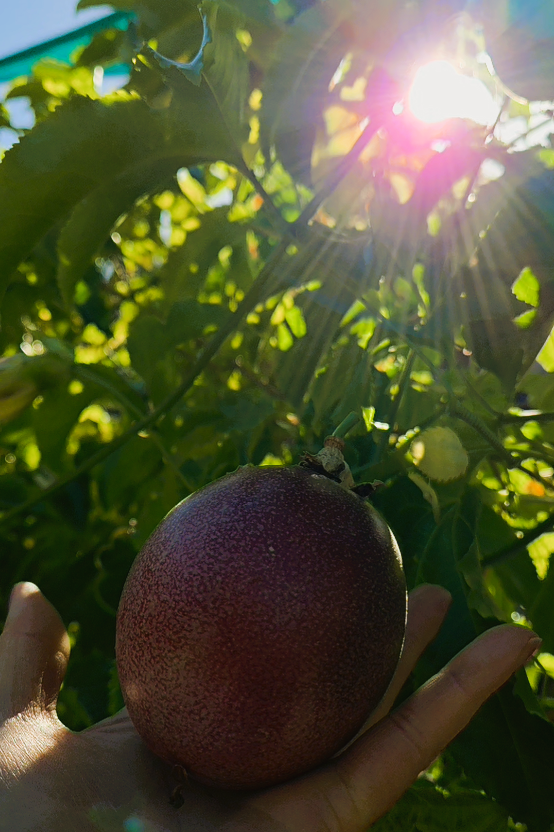
Evergreen, perfect for year-round natural landscaping
An Evergreen & Edible Natural Garden Barrier
This flowering fruiting vine is native to the subtropical regions of South America. While it grows best in warm, tropical climates such as South America, Asia, Australia, it can also grow in general climates that are warm and sunny, as long as there’s no threat of frost in the region.
The passionfruit is also an evergreen plant, meaning that it stays green year-round, if conditions are right (i.e., enough watering, healthy soils, and no sun scalding). That makes passionfruit ideal for creating a lush, natural barrier in the front and backyard landscapes, as it does a wonderful job with vining and wrapping around otherwise bare columns and fences. Who wants to see a plain fence and archway?
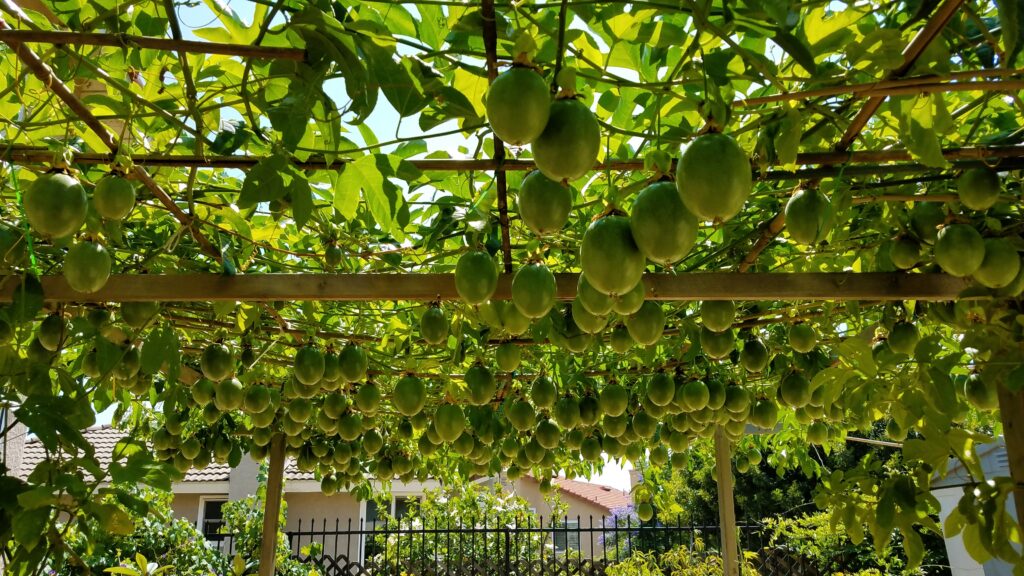
Create lush, verdant vertical accents to your garden landscaping by planting passionfruit at the base of your columns, archways, or even bodegas. Or create some natural well-needed shade for those hot summer days by allowing your passionfruit to vine and flourish over your pergola. Best part? They come bearing fruit, a lot of fruit.
Over and along the archway and fence,
even past the season
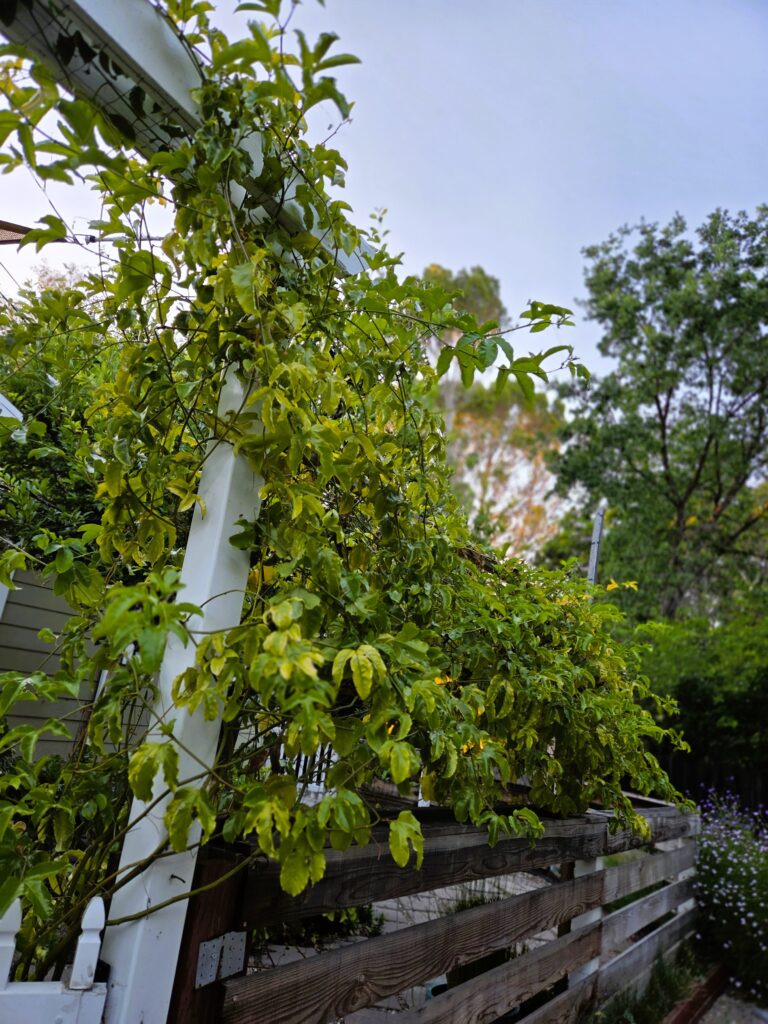
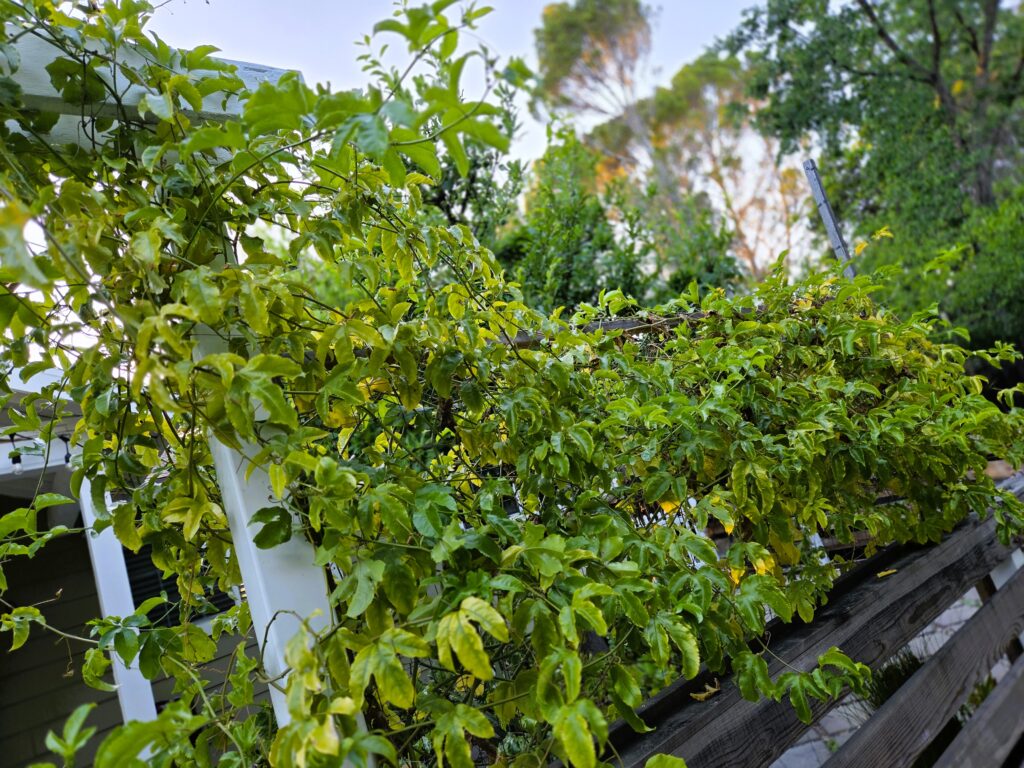
From below the Hut
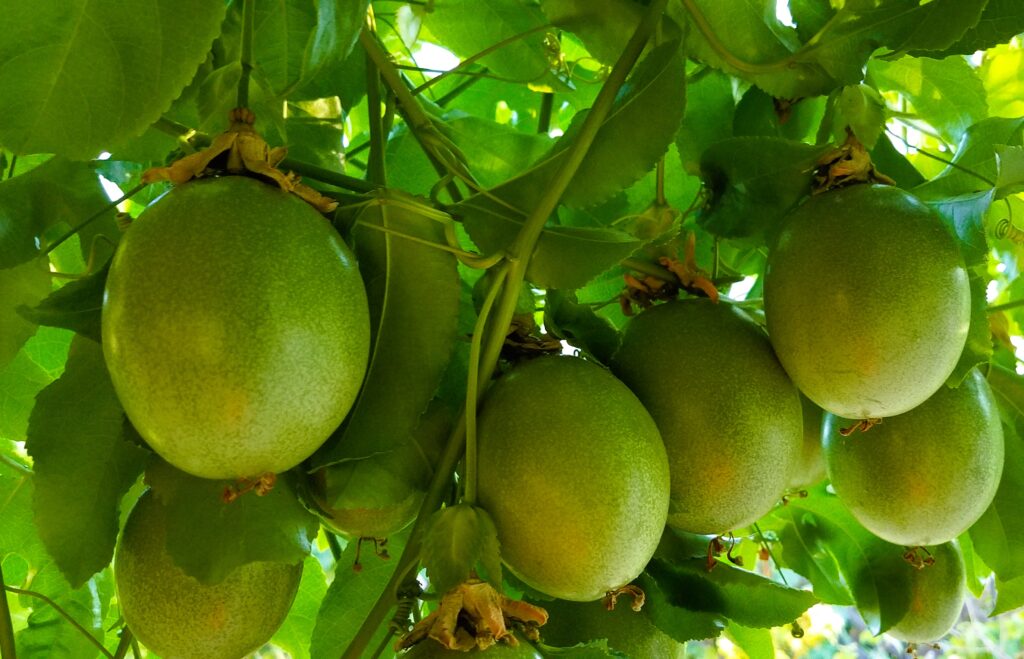
Health Essentials of the Passionfruit
Guess what? The passionfruit is bursting in flavor AND nutrients. The passionfruit is considered a nutrient-dense fruit. Here’s a quick snapshot of the health benefits of the passionfruit (Sources: Healthline and Medical News Today):
- Rich in vitamin C, vitamin A, and dietary fiber (thanks to the seeds, which are perfectly edible).
- Rich in antioxidants, protecting the body from free radicals. They contain a good amount of carotenoids and polyphenols – more than you’d find in other tropical fruits such as the lychee, mango, or papaya – with its range of anti-oxidants and anti-inflammation effects.
- The passionfruit also contains iron, although not much, but enough to be coupled with the vitamin C it already comes packed with to aid the body in its iron absorption.
- Passionfruit seeds have been shown to increase a person’s insulin sensitivity, thereby reducing the risk for many diseases, including diabetes
Growing the Passionfruit, Regeneratively
Due to the passionfruit’s ability to climb and grow quite extensively, it’ll need a sound and sturdy structure in place to help its vines climb and spread, and a good amount of well-draining, fertile soil. But before you go out to purchase synthetic fertilizers – don’t; just don’t.
Feed the soil; not the plants.
Look into worm poop instead. You can purchase worm compost (vermicompost) just as easily as the synthetic fertilizers. This is the one I use: Impact Organics – Earthworm Castings. Sprinkle it over the surface, leaving a 5-10 inch radius around the trunk of your passionfruit (so it gets to the roots) and then cover with soil or mulch. I do this once a year to give the plant a good boost in the nutrients it needs.
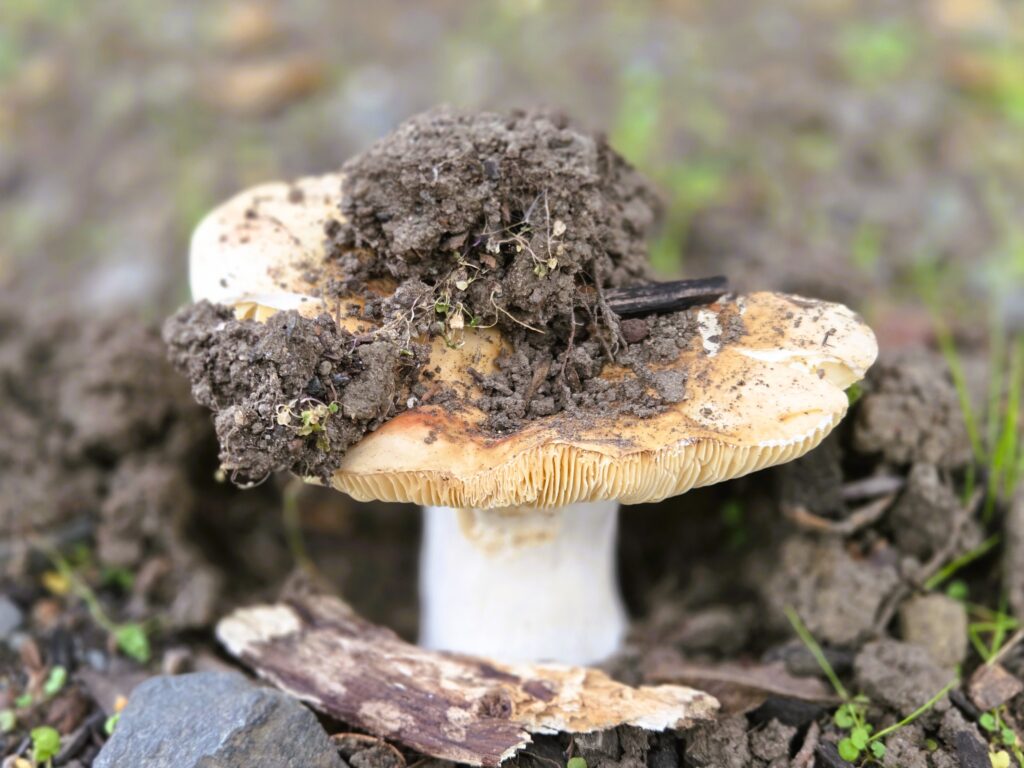
Over the course of the year, I add organic food scraps from the kitchen, dig a hole nearby the plant (not too close to interfere with the roots, and not too far to prevent the plant from absorbing the benefits), dump my food scraps, add some “browns” (paper, dried leaves, egg carton, etc.) to absorb the heat created as a result of the decomposition process and to balance out the nitrogen-rich scraps, and cover it with soil. Sure, a critter might dig it up overnight, but you’ll find ways to deter that from happening. The most successful trick we’ve used is to stick a pinwheel right smack in the middle of where the food scraps went. The movement of the pinwheel is somehow enough to scare the critters away.
By feeding the soil, you create the foundation for a healthy plant, which is more able to fend off pests and disease on its own.
No pesticides, ever.
Don’t use any pesticides. Just don’t. You will kill the pollinators necessary for pollinating and therefore fruiting – and because it’s unnecessary. The toxicity only spreads from there. So it’s best not to introduce it to your garden ecosystem at all.
If you do find pests, honestly, the thing I do is wait. It may sound too … wabi sabi … but give it some time and the natural predators will come. Trust that nature will balance itself out.
Hand-Pollinating
Most of the time, your passionfruit will be pollinated by the myriad hardworking pollinators surrounding your garden – this is why it’s important to steer clear of the pesticides!
But sometimes you’ll want to doubly ensure your passionfruit bounty. Or if you notice that your vibrant passion flower blossoms aren’t bearing fruit soon after, there’s always the option to hand-pollinate.
Passionfruit Anatomy
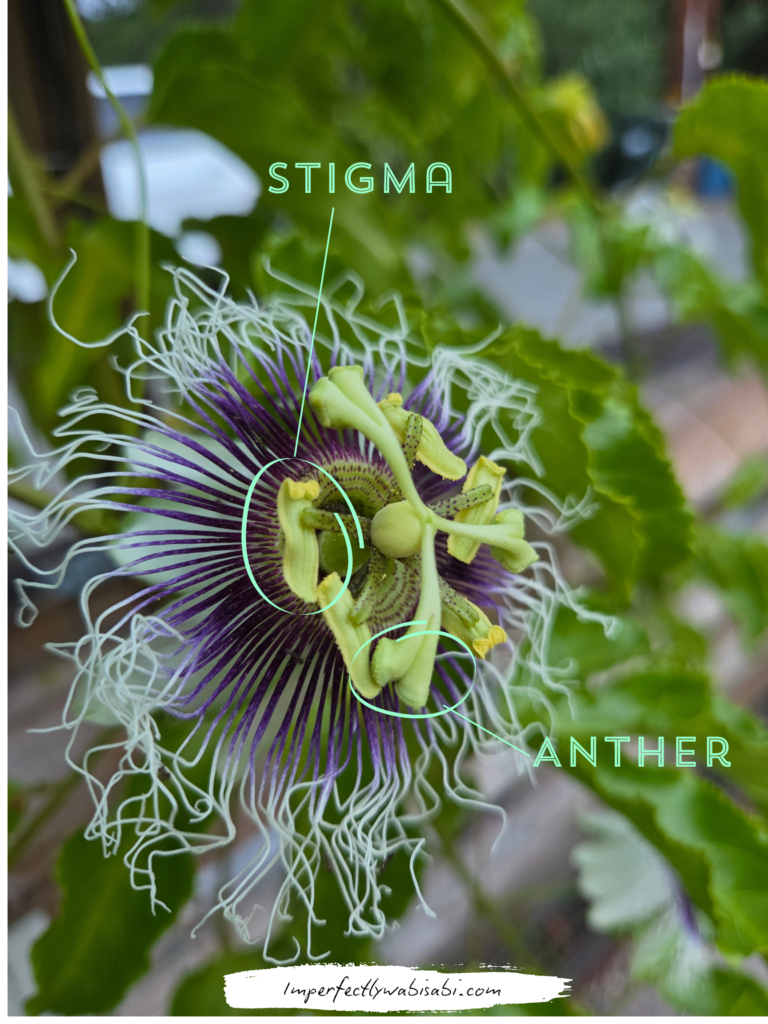
Before we get to hand-pollinating, let’s understand the anatomical basics of the passionfruit flower. There are several parts to the passionfruit flower, but for the purposes of hand-pollinating, we’ll focus on the two main parts critical for hand-pollinating: 1) the anthers and 2) the stigmas (Source: University of Florida).
How to Hand-Pollinate
Each passionfruit flower contains 5 stigmas (which I call the “pollen pads”) and 3 anthers (which I term, “pin cushions”). The stigmas/pollen pads contain the pollen on the underside of their bellies, and the stigmas are the bulby-looking “pin cushions” where the pollen needs to get to.
In short: get the pollen from the stigmas/pollen pads to the anthers/pin cushions.
Tickle, tickle ... Dab, dab, dab ...
Take a small paintbrush. Tickle the pollen from one stigma and then transfer over to one of the anthers. You’ll want to dab the bulbs part of the anther. It doesn’t matter which anther or stigma. The pollen just needs to transfer from one of the stigmas to one of the anthers. Surely, the more the better the chances of pollination success, so give it a few tickles and dabs combinations.
Tickle, tickle from the stigma. Then dab, dab, dab to the anther.
Time is of the Essence
Once the passionfruit flower comes into full bloom, you’ll have only a 4-6 hour window to hand pollinate, usually in the morning or at dusk. Once this window passes, the pollen will have taken off, and there won’t be any pollen left to hand-pollinate. So, timing is of the essence.
Passionfruit: In the Kitchen
Once the passionfruit starts producing, the season can get quite hefty and bountiful. Luckily, the passionfruit’s wonders go beyond the garden.
If you’re curious for some culinary ideas on how to enjoy those delicious, sweet, and tangy passionfruits, here’s how we make the most out of passionfruit season:
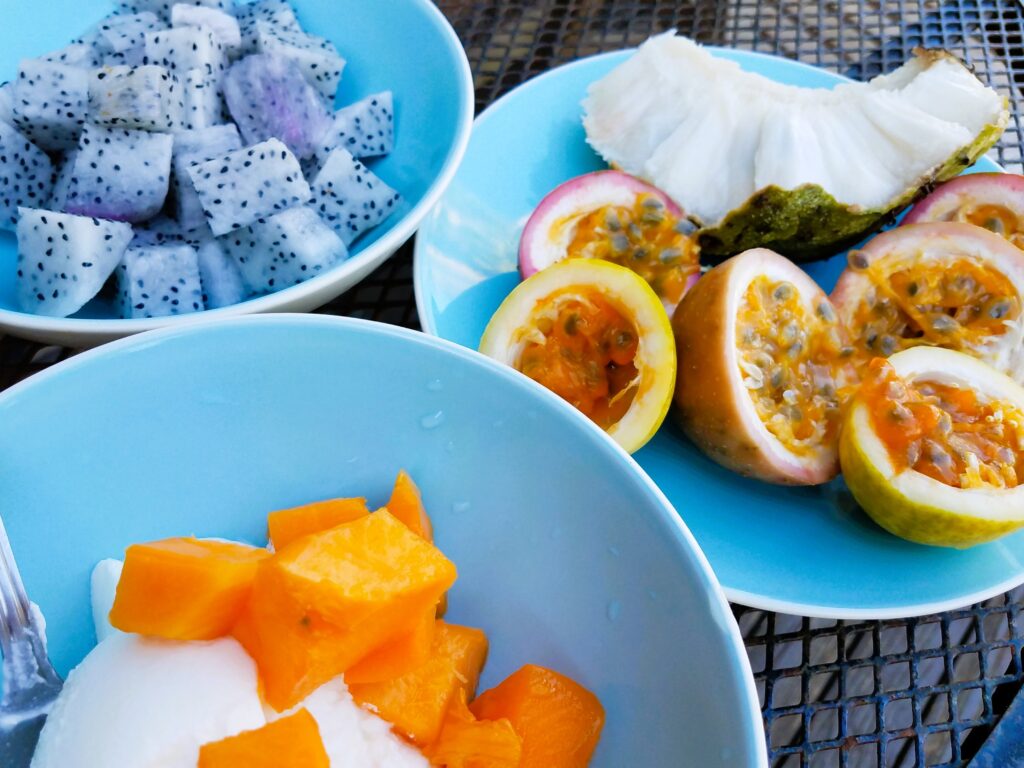
- Cut, scoop, and enjoy. Cut it in half and enjoy with a spoon. Just like that.
- Yogurt. Good ol’ plain yogurt in the mornings. The passionfruit – seeds, pulp, and all – add a wonderful pop of flavor to any plain yogurt bowl. The seeds add a crunch, and the the pulp add the tanginess and sweetness. Can’t beat waking up to a fresh bowl of passionfruit, especially on those sunny summer days.
Passionfruit LEmon Tart
Last but not least, the ultimate way we enjoy our passionfruit is by making a Passionfruit Lemon Tart. With the tanginess of the passionfruit and the zing of lemons, this tart perfectly strikes that “sweet but not too sweet” balance, while being oh so tangy and zingy. The crust and the passionfruit seeds create the perfect contrasting balance in texture to the thick creaminess of the tart itself.
Give it a try for yourself. It’s the simplest and tangiest recipe to making a tart there is. No sieves, no simmering, no straining, no separating. Just knead, toss, mix, and bake.

Let us know what you think!
Did you try this recipe? Leave us a comment below or share with someone who might get a kick out of this simple, tasty dish.
Did you find this garden idea useful? Leave a comment or share with a fellow garden enthusiast!
To Share
Growing food is its own form of peace and act of rebellion.
At Imperfectly Wabi Sabi, our garden is an ecosystem. We grow our food using regenerative, zero-waste, and sustainable practices, by putting soil health at the heart and center of everything we grow — no pesticides ever; just good compost (i.e., food scraps from the kitchen), worm poop, and with help from nature and our critter neighbors.
It’s a garden-to-kitchen, regenerative way of life here.


You May Also Like

5 Surprising Uses for All Those Lemons
February 11, 2026
DIY Upcycled & Re-Purposed Construction Party Activities
March 10, 2026
5 Comments
Chelsea Simdorn
What a thorough post! Thank you so much for the information!
Imperfectly Wabi Sabi
Of course! May it help with bringing you a bountiful passionfruit season 🙂
Dee
It looks so delicious- you did a great job. I tried to grow it for two years- it flowered but no fruits. even tried hand pollinating but was told later that I need male/female – and no sure what variety mine was so got rid of it. You
Imperfectly Wabi Sabi
Actually, passionfruit have both male and female parts in the same flower! That’s why all it takes is getting the pollen from the pollen pads to the pollen pin cushions — all from the same flower!
LisaLisa
What a wonderful guide! I had no idea passionfruit could be used as both a productive food plant and a beautiful natural landscape feature. The hand-pollination tips were especially interesting, and I love the focus on regenerative gardening and working with nature rather than against it. Those passionfruit desserts look absolutely delicious too.