
Braised Pork Spareribs & Daikon
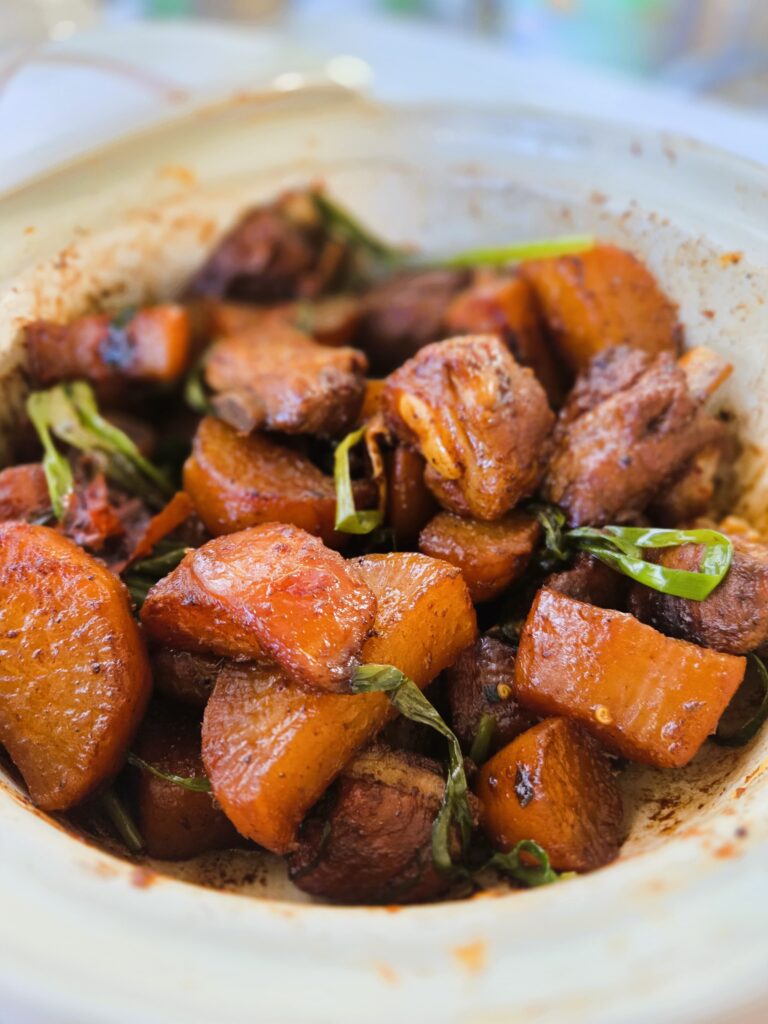
Better known as Hongshao Paigu, 紅燒排骨
When I want traditional home-cooked Chinese food, I think of this dish.
When I want something savory, tender, and soothing, I salivate at the thought of this dish.
When I’m hungry and want a meal that’s balanced yet completely enveloped with deep savory flavors, I make this dish.
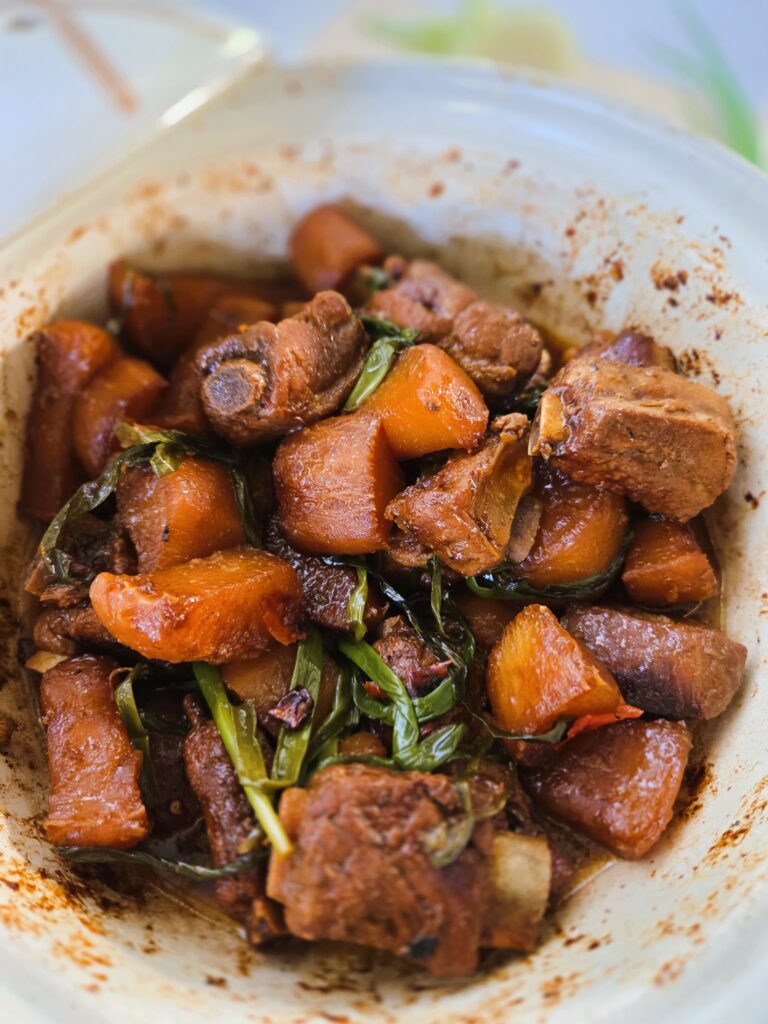
Braised Pork Spareribs and Daikon is a classic comfort food in so many Chinese households. With its deeply stewed flavors and fall-off-the-bone tenderness, this is the dish to cook in those winter months, or simply if you’re in the mood for something hearty and soothing for the soul.
Braising Basics.
Hongshao, transliterated as red-braised, is a traditional technique in Chinese kitchens rooted in its slow-stew method to create deeply rich and layered flavors.
Braising is one of the best-known secrets for creating the most tender and umami flavors with meat. Hongshao, in particular, entails a generous amount of dark soy sauce, rice wine, and the juices from the vegetable – all combined in a slow-stew to deeply meld the flavors and juices into the meat and the entirety of the dish.
With the right combination of soy sauce, rice wine and spices, and by giving this dish the space and time to meld the flavors together, you’ll be able to hongshao in no time.
Imperfectly Wabi Sabi Style
Cooking up & Passing down recipes the way our grandparents and their parents did
Measuring cups? Measuring spoons? Nah. We didn’t grow up with those.
Imperfectly Wabi Sabi Recipes continue the tradition of creating flavors and dishes the way our parents and their parents did – by tasting and sensing as we go.
You’ll pick up our love language in no time.
Recipe Notes
TOTAL TIME: 1 – 1.5 hours total. This encompasses both preparation and cooking, as much of the cooking of various ingredients takes place concurrently while the meat gets braised up.
SERVES: 4-6 people
EQUIPMENT:
- A medium-sized pot. I prefer using a clay pot (because my mom got it for me one day, so why not, and also because it allows for greater moisture retention, ideal for slow-cooking)
- That’s it. Pretty great, right?
Ingredients
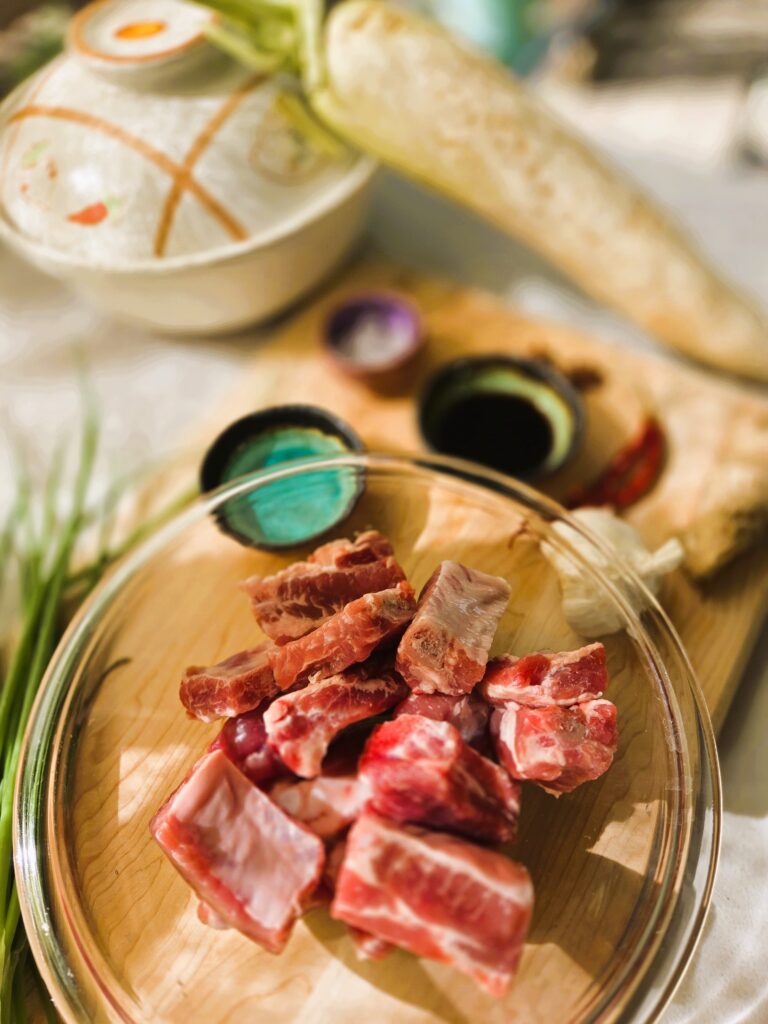
The key ingredient groups in a good braised pork spareribs include 1) the meat, 2) the vegetable, and 3) the sauces and aromatics.
- The Meat – Pork Spareribs – About a 1 – 1.5 lbs
- The Vegetable – Daikon – 1 big one. The longer and less curvy, the better (i.e., easier to cut)
- The Sauces and Aromatics –
- Rice Wine – 1 cup (yeaahhh)
- Soy Sauce (Dark) – 1/2 cup
- Garlic – 5.-6 cloves, diced
- Ginger – 5-6 slices
- Lump Sugar – 8 – 10 clumps (if you’re unfamiliar and curious with what lump sugar is, here’s my go-to)
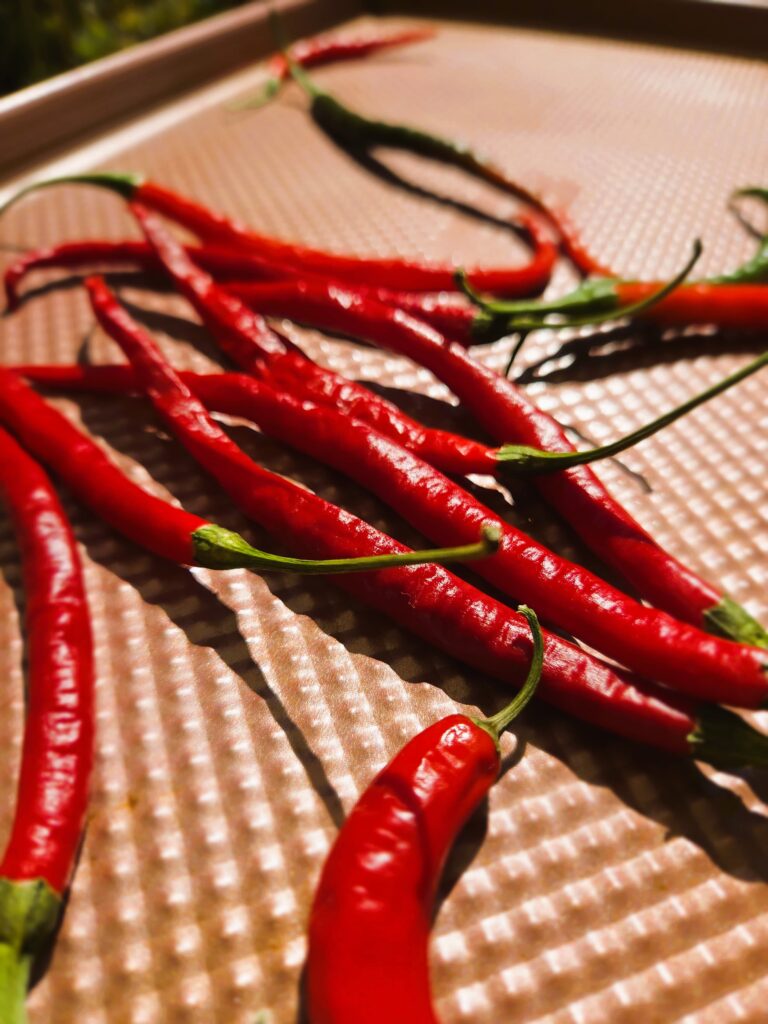
- Chilies – 1-2, depending on how spicy you want it
- Anise Star – 2
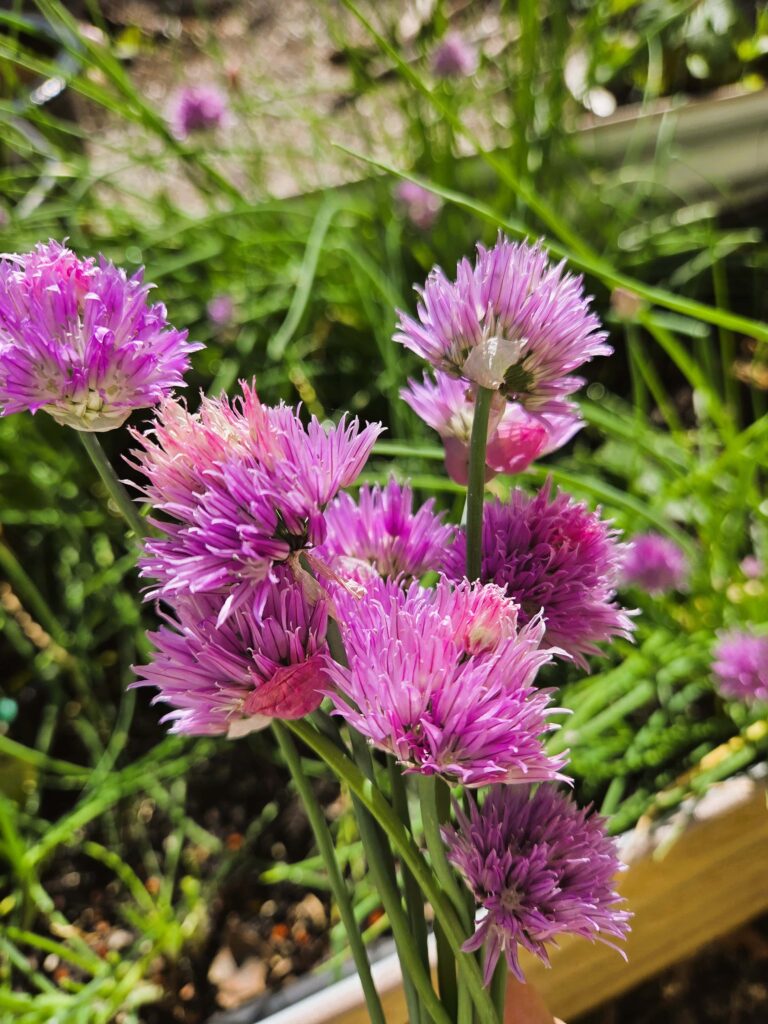
- Green Onion – 2 stalks, roughly hand-ripped (no need for chopping)
- Water – 1/2 cup
Instructions
A good braise comes down to a good simmer and slow-stewing of the ingredients.
- Add a little oil to the pot, enough to coat the bottom, and turn up heat to medium
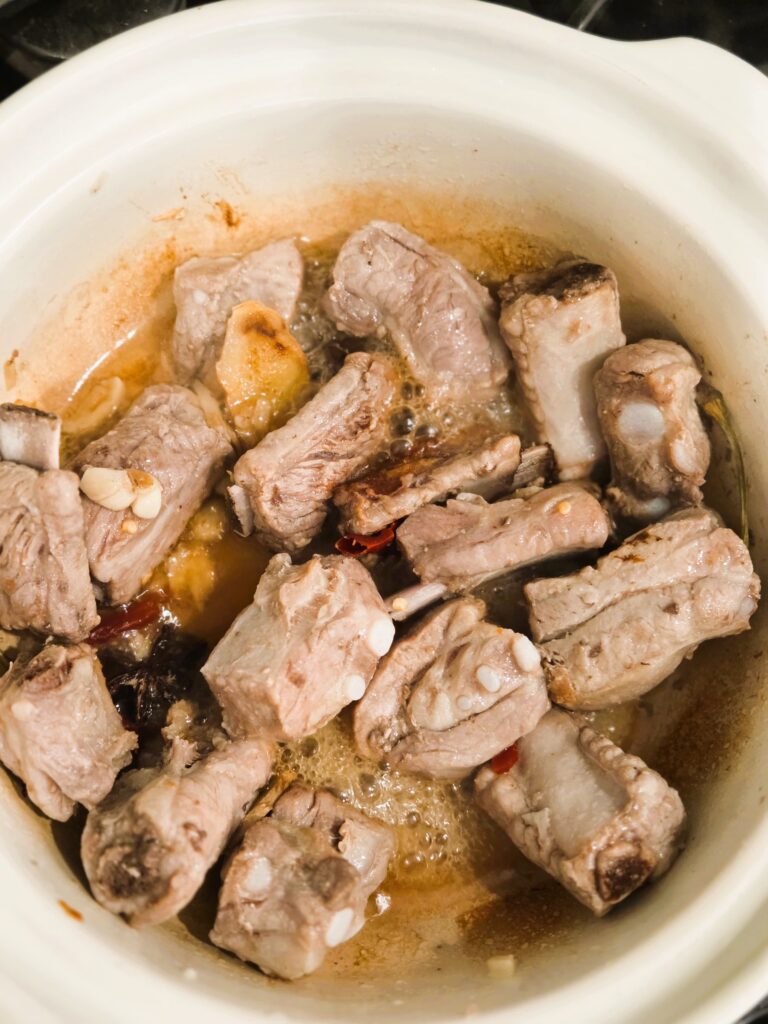
- Add the pork spareribs, garlic, ginger, chili, and anise stars
- Give it a stir, let it sautee and sizzle a bit. Place the lid back on and let sizzle for about 10 minutes while you turn your attention to the daikon.
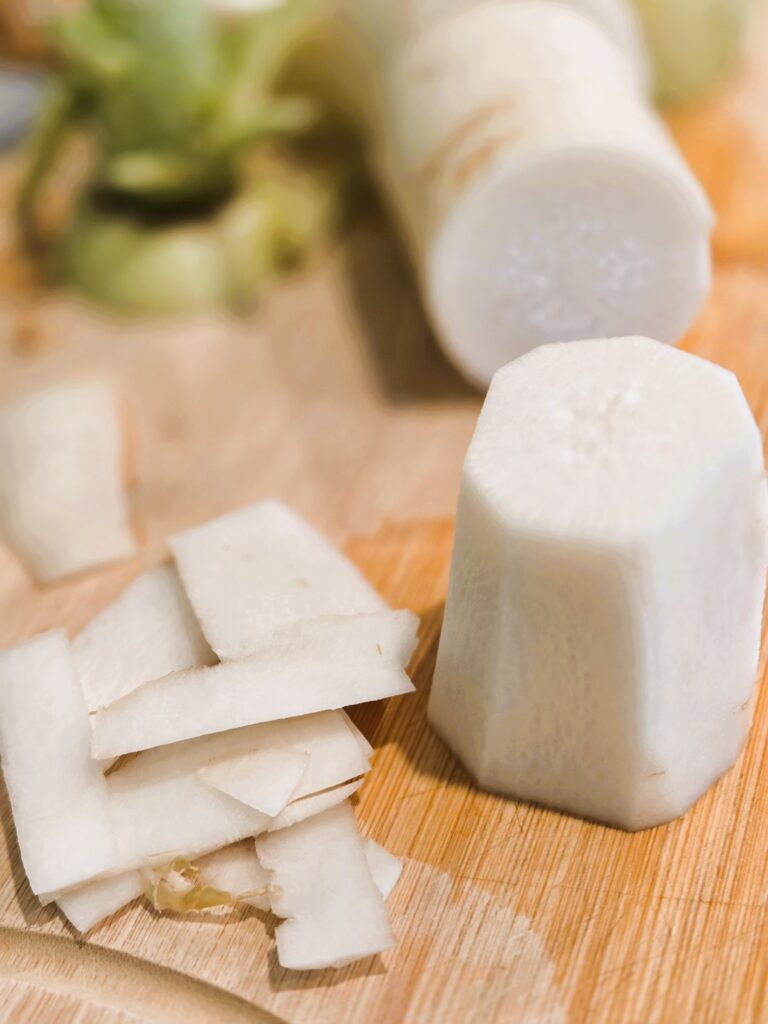
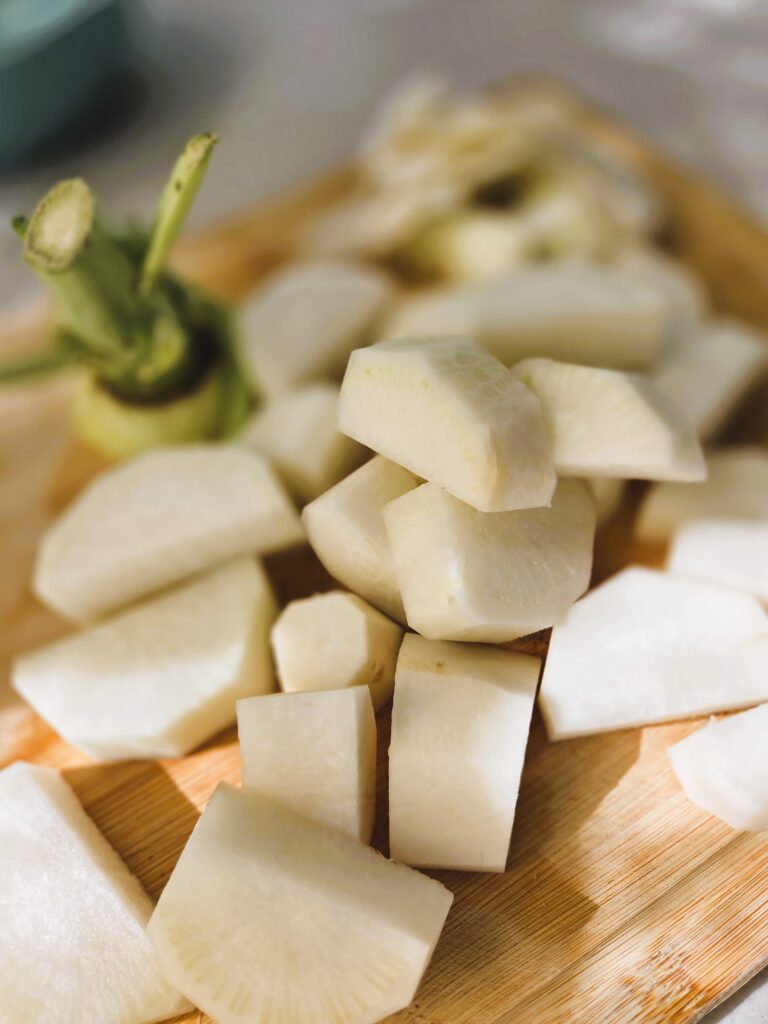
- Chop up the daikon into thick cross-sections. Then thinly shave off the skin of each chunk. Make sure to shave off enough of the skin/outer layer, as that’s where the fibrous, tough parts are. Once skinned, cut into thinner cross-sections (about 1/2 inch cross-sections), and then cut those in half (like trapezoids or crescents) to make more bite-sized.
- When the pork starts showing a few golden brown patches (i.e., a gentle, light sear), pour in the rice wine. Approx. 1 cup, but as an eyeball gauger and cooker, I splash in enough until the wine level comes up to about half way up to where the meat sits.
- Gently scrape up any burnt goodness juice from the bottom of the pot with the wine, give everything a stir to ensure even coating, and then let it simmer to allow the alcohol to evaporate (2-3 minutes)
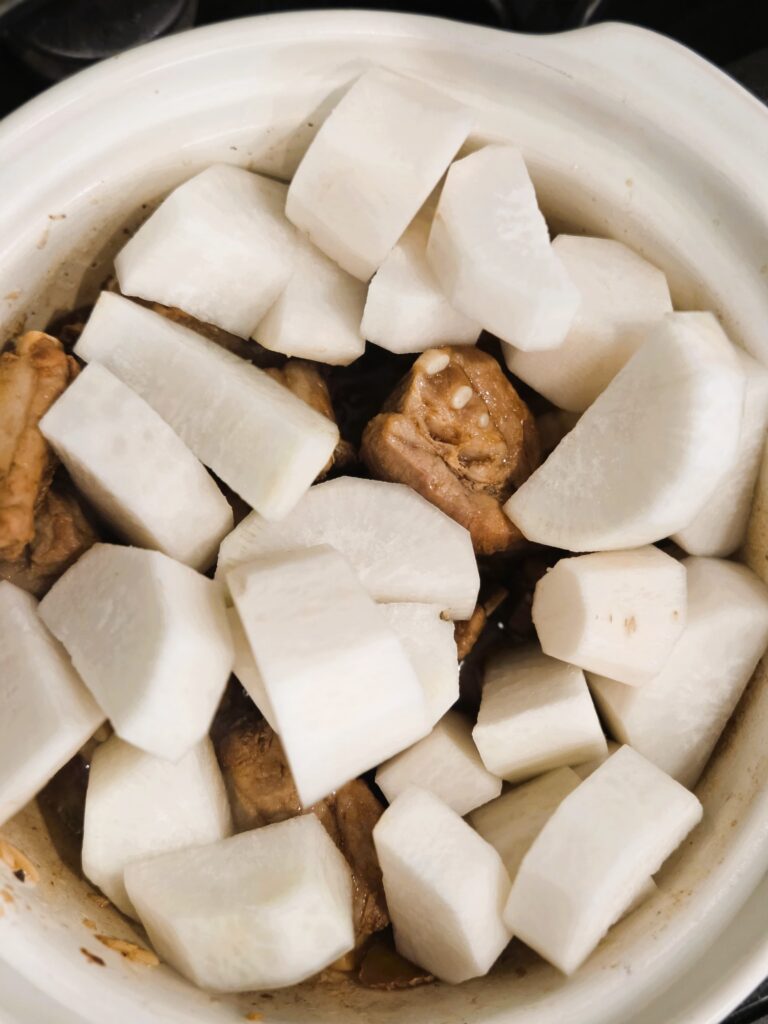
- Pour in the dark soy sauce, toss in the lump sugar, and cut-up daikon, and give it a mix for even coating and cooking.
- Place lid back on, turn heat down to medium-low and let simmer for 50 – 60 minutes, occasionally checking and stirring to ensure even cooking and coating and that nothing is burnt on the bottom of the pot.
- Toss in green onion, and give another stir to ensure even cooking and coating of flavors.
- Modify to taste – Add water to dish if it’s looking a little dry — it should be saucy — or if too salty for your tastes. Alternatively, if not salty enough, add 1 tbsp more of soy sauce.
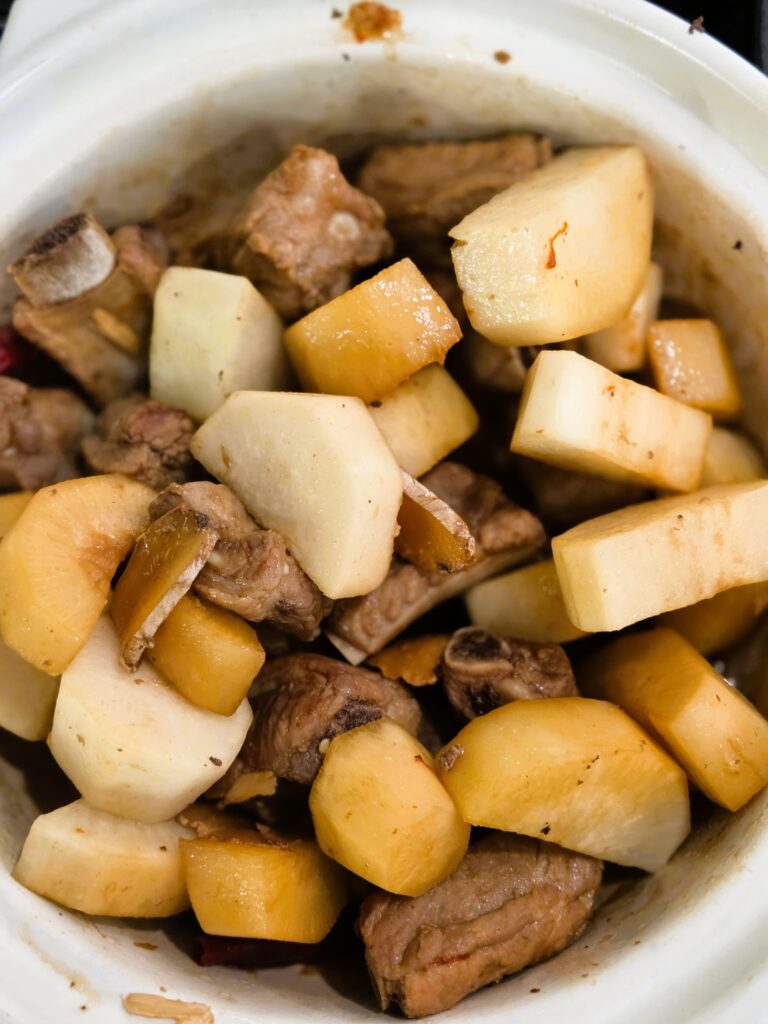
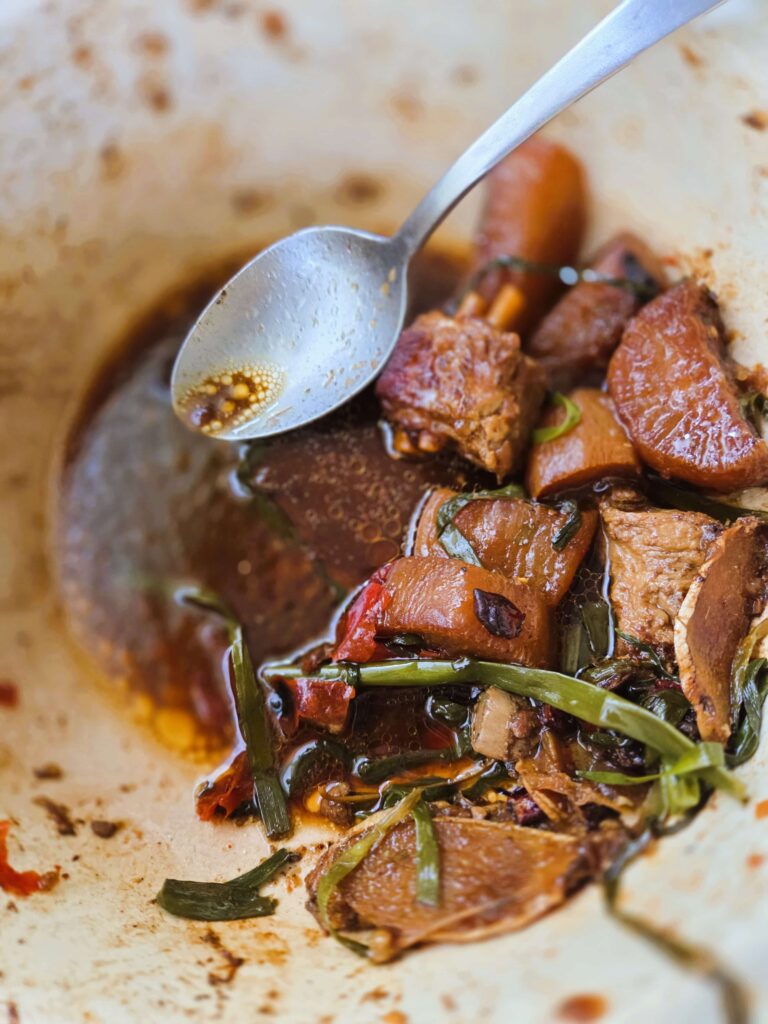
- Place lid back on and let simmer for another 10 minutes, or until meat is tender and fallng off of the bone and the daikon is soft.
Let it Braise
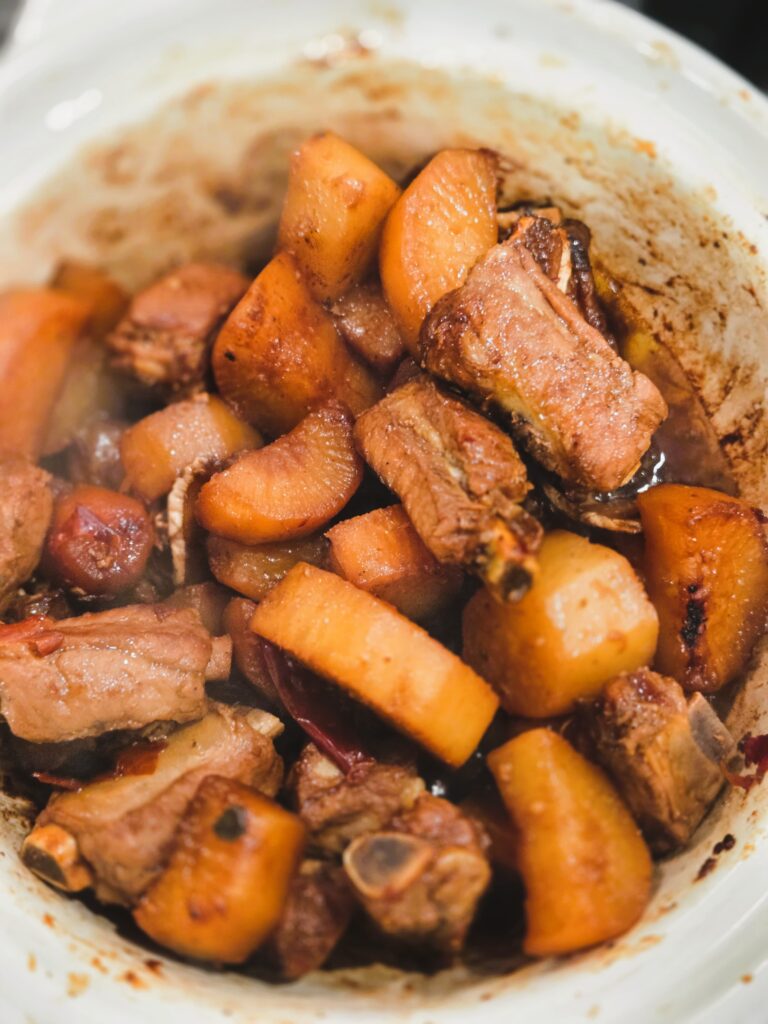
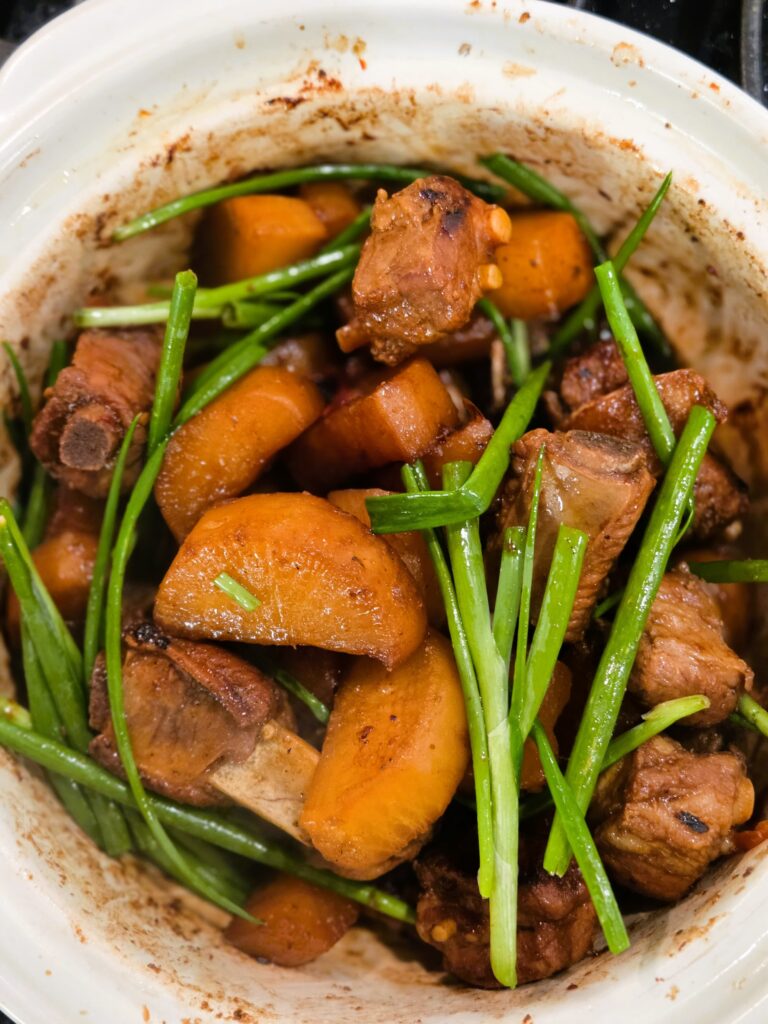
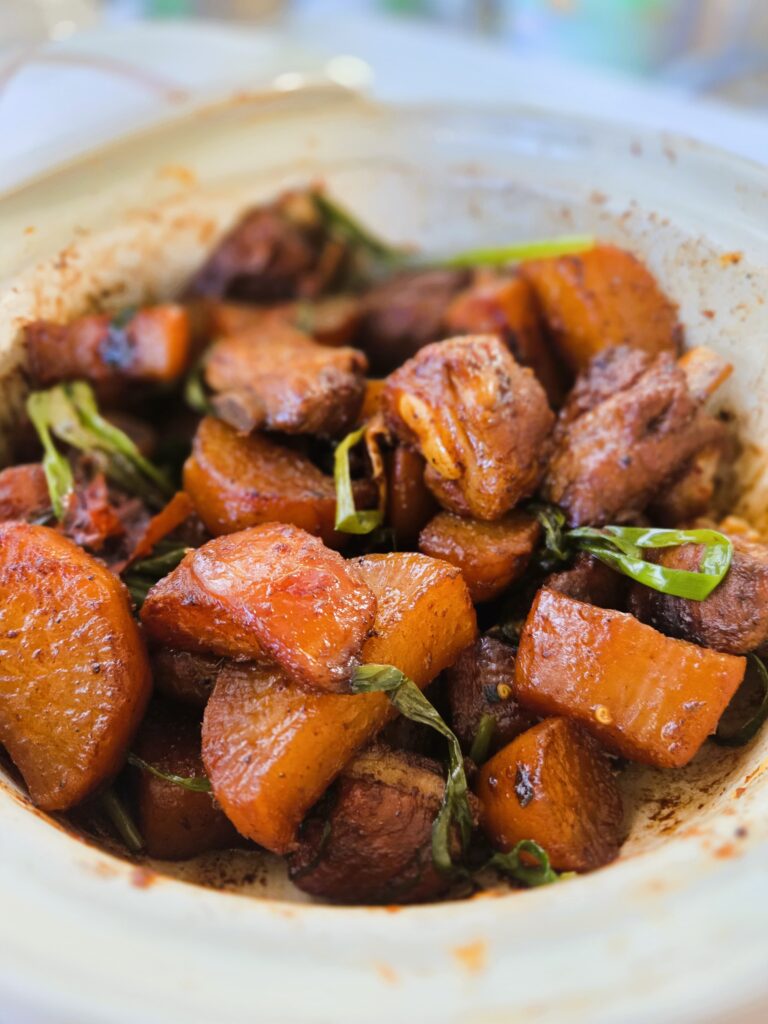
Kitchen Notes
- Impurities – Most braising recipes will call for boiling the pork first to rid it of impurities (e.g., fat, gunk, etc.), but I skipped this step to save on time. If you’d like to follow this step, here are the steps:
- Fill your pot half-way with water to a boil
- When the water comes to a boil, toss in the pork spareribs, bring to a boil again, and let boil for about 5-7 minutes. You’ll start to see fats and “impurities” rise to the top.
- Dunk the water into a metal strainer (plastic melts – not good). Do NOT rinse. The purpose of this step is to dump out the boiled water containing all the impurities. So, no need to rinse.
- Pour the boiled pork spareribs back into the pot, and place back on stove, on medium-heat
- Let your tastebuds guide the way. Taste as you go. Simple rules of thumb to follow: If it’s too salty, add a clump of sugar. If it’s not salty enough, add a tbsp or two of soy sauce. If it’s not sauce-y enough, add 1/2 cup of water. Mix it all together, give it a taste, and go from there.
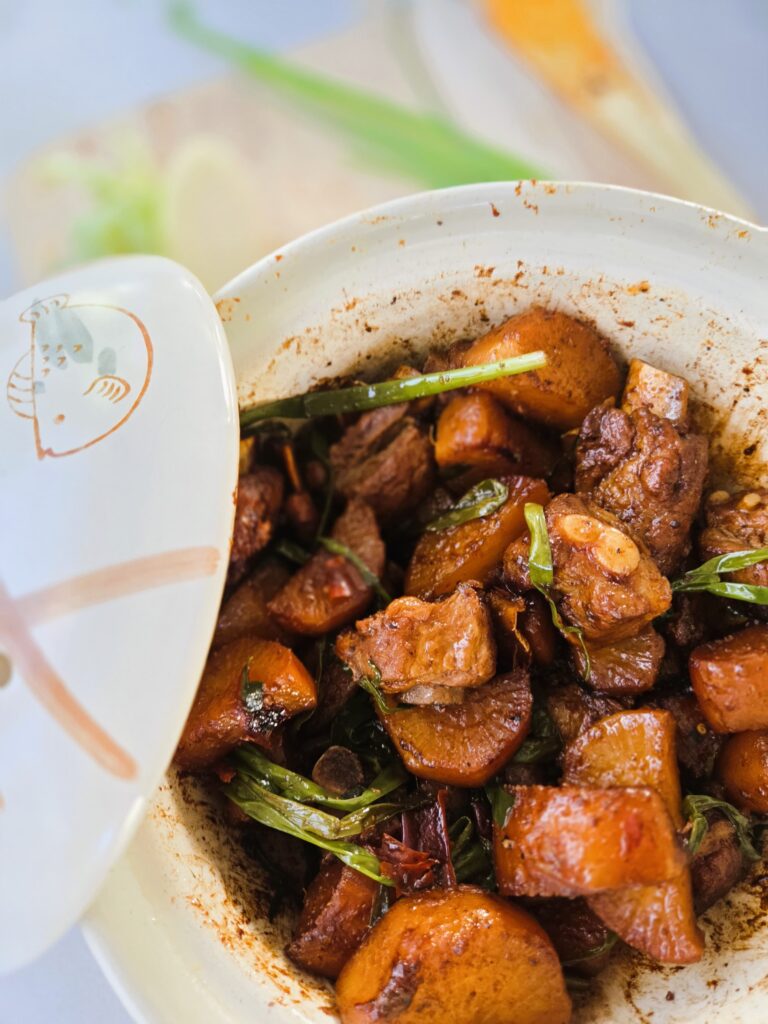
Goes Great With...
Rice. Must have rice with this dish! The braised pork spareribs and tender daikon create a juicy savory sauce that you’ll want to drizzle over a bowl of rice. The rice will create a good balance with the depth of flavor with this dish.
If you’re in the mood for other home-cooked inspired traditions in the kitchen, check out our other recipes:
- Classic Hot & Sour Soup (recipe). Or if you’re in the mood for a coconutty lemongrass flavor, try our Tom Kha (Lemongrass Coconut Soup) (recipe), a broth that is bursting with flavor.
- Cantonese-Style Steamed Fish (recipe), a traditional dish that’s light yet intensely aromatic, and incredibly easy to make.
- Broccoli Chicken Stir-Fry (recipe), combining – yet again – protein and vegetables, with a delicious savory sauce to coat over the rice in your bowl – all in one quick stir-fry.
This recipe was made using ingredients — the green onions and gong bao chilis – grown from our very own garden where we grow our food regeneratively. Nothing beats these fresh, amazing fragrances and flavors grown right in our own garden.
Get it before it's gone
Let us know what you think!
Did you try this recipe? Leave us a comment below or share with someone who might get a kick out of this simple, tasty dish.
To Share
Cooking feeds the soul, not just the stomach.
Imperfectly Wabi Sabi recipes are focused on creating simple, cozy comfort foods by blending family tradition, creative ways to “use what we got” – food scraps, left-overs, and all – and by using what’s in season from our very own regenerative Garden.
There’s no wasting around here. Only garden-to-table and family tradition wrapped tastefully together. Happy Wabi Sabi eats.


You May Also Like

Plum Yogurt Parfait with Crushed Pumpkin Seeds -3 simple ingredients
June 3, 2026
Hot and Sour Soup (Quick, Simple, and Vegetarian)
December 16, 2025
7 Comments
Leir
Oh my my my…. Mouthwatering. Trying it out. Thanks for the recipe. The chinese style steamed crab looks good too.
Imperfectly Wabi Sabi
It really is … haha. Enjoy!!
EARL
This one warms the soul! So yummy in my tummy!
Imperfectly Wabi Sabi
Thanks, Earl. You’re my #1 fan.
Mary Ann
Nice recipe. Sounds tasty.
Imperfectly Wabi Sabi
Passed down from Wai Pwo to Mama to this mama now 🙂
JRC
Wow I love short ribs but I nevere quite to Asian short ribs and I am excited to try this. I would love to make this in the slow cooker.